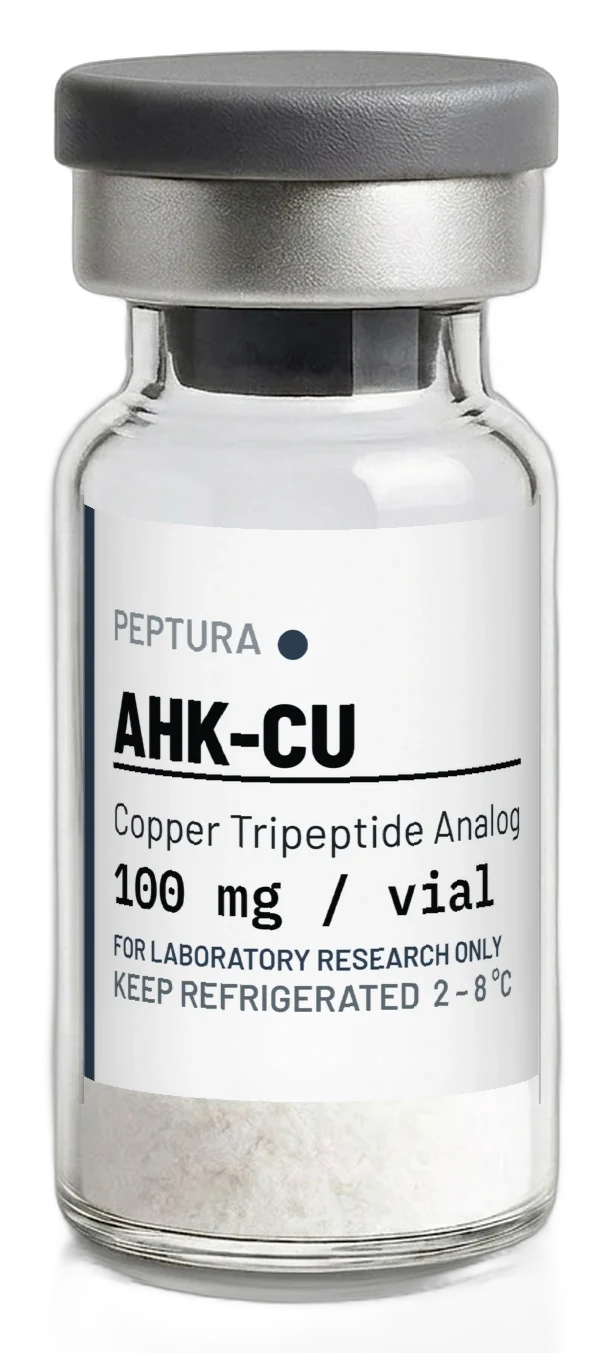
AHK-Cu.
About AHK-Cu
AHK-Cu is studied in dermatological and anti-aging research, e.g. in relation to skin and pigmentation models. Like GHK-Cu, AHK-Cu binds copper(II) and is discussed as a cofactor donor for copper-dependent enzymes such as lysyl oxidase. In the central published study, AHK-Cu stimulated human hair follicle growth ex vivo and dermal papilla cell proliferation.
Research Application
AHK-Cu is studied mainly in hair-follicle and dermal-papilla research as a possible alternative or complement to GHK-Cu. For general skin and wound-healing models, direct literature is markedly sparser than for GHK-Cu.
Important to know
Claims circulating online are often not backed by valid clinical data. Treat all information as a starting point for your own scientific research, not as usage guidance.
Sequence and regulatory status data are based on publicly available sources and refer to the compound in general, not to a specific product.
Research Overview
The evidence base for skin and pigmentation peptides is largely based on preclinical and early clinical investigations.
- Pyo HK, et al. Arch Pharm Res. 2007;30(7):834–839. PMID 17703734
References without a PMID can be located via the respective publisher. This overview does not claim to be exhaustive.
Similar Peptides
Question about AHK-Cu?
We reply personally – via email or Telegram.