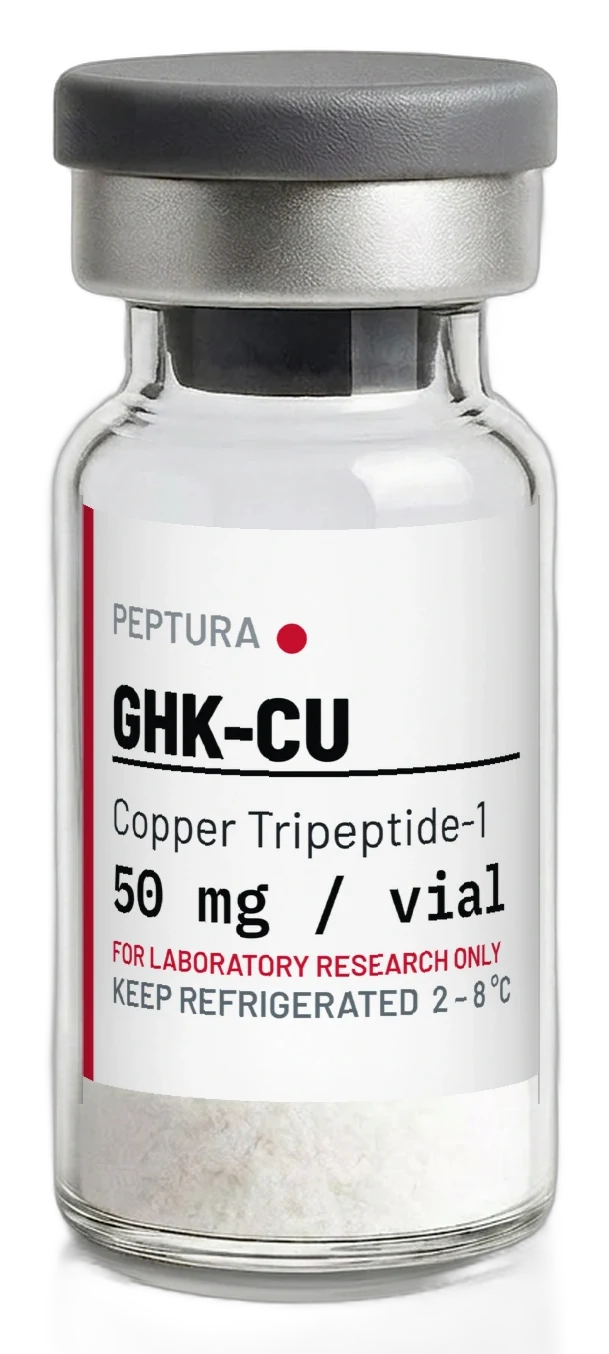
GHK-Cu.
About GHK-Cu
GHK-Cu is studied in dermatological and anti-aging research, e.g. in relation to skin and pigmentation models. The copper component serves as a cofactor for lysyl oxidase, an enzyme involved in collagen and elastin cross-linking. Gene expression analyses associate GHK-Cu with modulation of thousands of genes toward repair-related patterns.
Research Application
Studied in skin and wound-healing research, based on its well-documented role as a cofactor in collagen cross-linking. Topically it has been used in cosmetics for decades; evidence for the injectable form is considerably thinner.
Important to know
Claims circulating online are often not backed by valid clinical data. Treat all information as a starting point for your own scientific research, not as usage guidance.
Sequence and regulatory status data are based on publicly available sources and refer to the compound in general, not to a specific product.
Research Overview
The evidence base for skin and pigmentation peptides is largely based on preclinical and early clinical investigations.
- Pickart L, Margolina A. Int J Mol Sci. 2018;19(7):1987. PMID 29986520
- Badenhorst T, et al. J Aging Sci. 2016;4(1):166.
- Maquart FX, et al. J Clin Invest. 1993;92(5):2368–2376. PMID 8227353
References without a PMID can be located via the respective publisher. This overview does not claim to be exhaustive.
Question about GHK-Cu?
We reply personally – via email or Telegram.