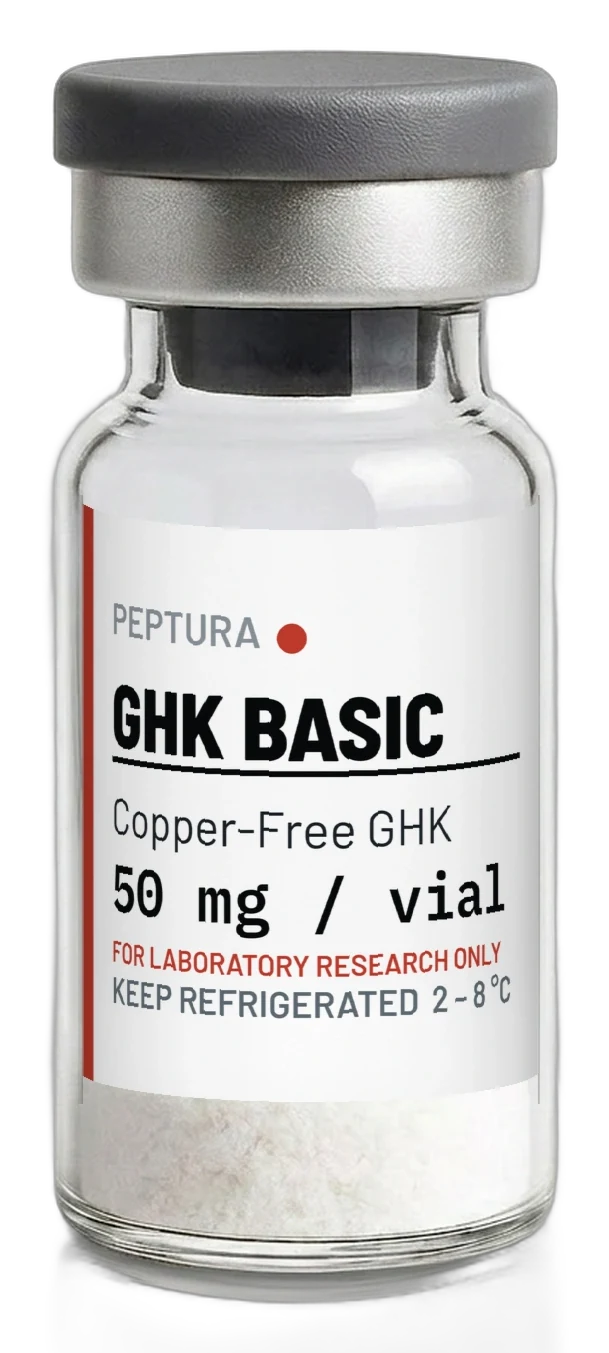
GHK Basic.
About GHK Basic
GHK Basic is studied in dermatological and anti-aging research, e.g. in relation to skin and pigmentation models. GHK has a high affinity for copper(II) and spontaneously forms GHK-Cu once free copper is available. Without complexed copper, the direct cofactor function for lysyl oxidase is absent. One study nonetheless found that copper-free GHK also increased proliferation markers in keratinocytes.
Research Application
GHK Basic is used to distinguish copper-dependent from copper-independent effects of the tripeptide — for example in comparative designs against GHK-Cu.
Important to know
Claims circulating online are often not backed by valid clinical data. Treat all information as a starting point for your own scientific research, not as usage guidance.
Sequence and regulatory status data are based on publicly available sources and refer to the compound in general, not to a specific product.
Research Overview
The evidence base for skin and pigmentation peptides is largely based on preclinical and early clinical investigations.
- Choi HR, et al. J Pept Sci. 2012;18(11):685–690. PMID 23019153
References without a PMID can be located via the respective publisher. This overview does not claim to be exhaustive.
Similar Peptides
Question about GHK Basic?
We reply personally – via email or Telegram.