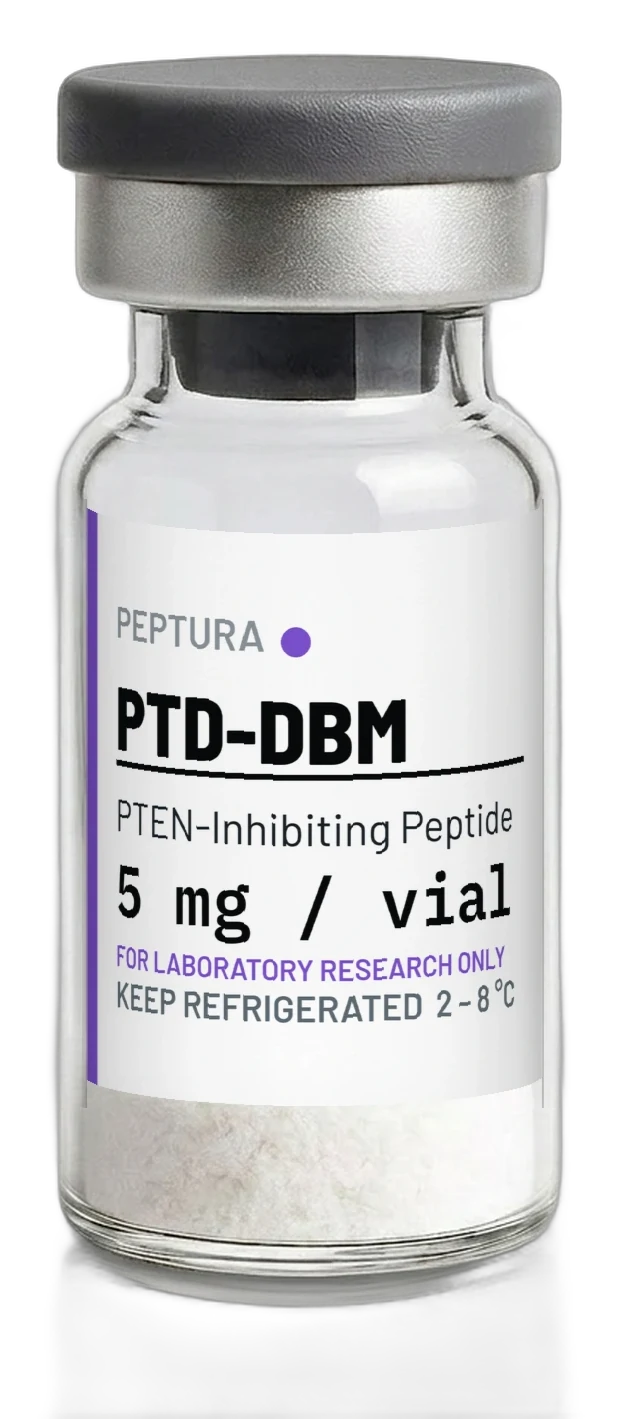
PTD-DBM.
About PTD-DBM
PTD-DBM is studied in the context of neuroscience and cognitive research. The PTD component mediates cell-membrane penetration; the DBM component competes with CXXC5 for the PDZ domain of Dishevelled (Dvl), relieving CXXC5-mediated suppression of Wnt/β-catenin signaling.
Research Application
Used in the published literature as a tool to study Wnt/β-catenin signaling in hair follicle neogenesis and wound healing (topical application in mouse models).
Important to know
Claims circulating online are often not backed by valid clinical data. Treat all information as a starting point for your own scientific research, not as usage guidance.
Sequence and regulatory status data are based on publicly available sources and refer to the compound in general, not to a specific product.
Research Overview
Studies on neuroscience-related peptides are predominantly preclinical.
- Lee SH, et al. J Invest Dermatol. 2017;137(11):2260–2269.
References without a PMID can be located via the respective publisher. This overview does not claim to be exhaustive.
Similar Peptides
Question about PTD-DBM?
We reply personally – via email or Telegram.