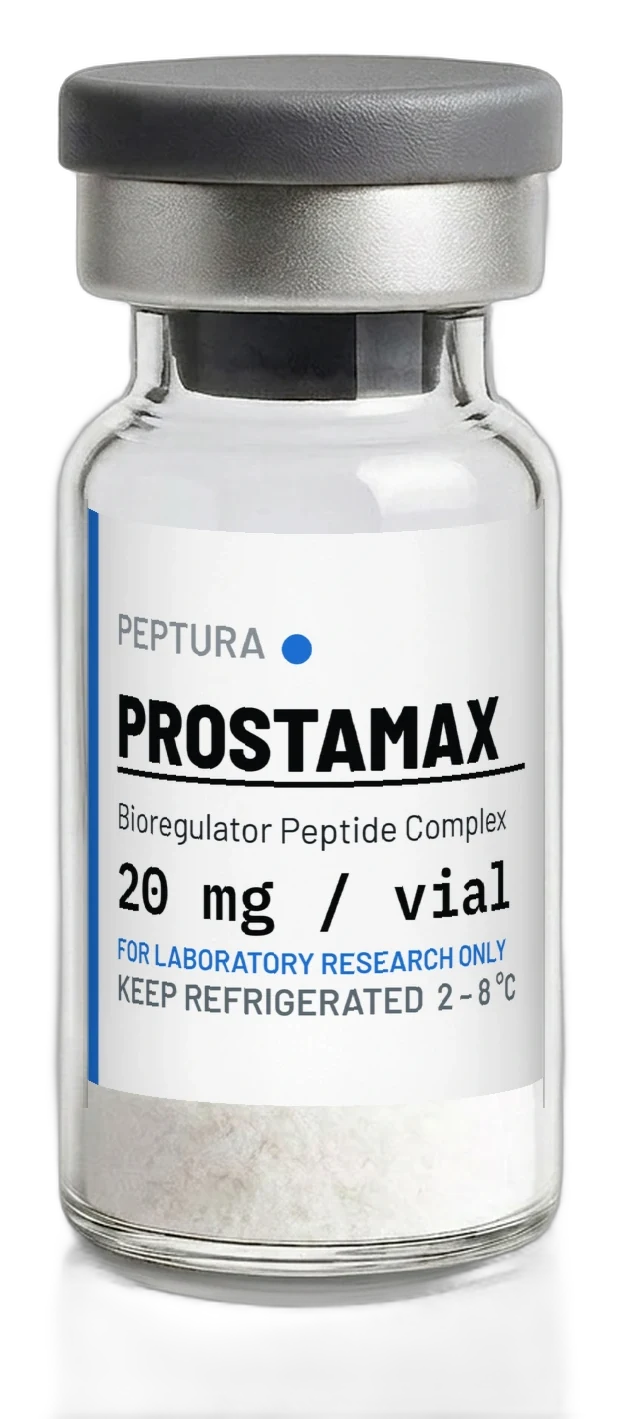
Prostamax.
About Prostamax
Prostamax is studied in tissue regeneration and repair research, including cell and animal models. The available studies examine the effect of Prostamax on heterochromatin in human lymphocytes — a general chromatin effect, not a prostate-specific finding. A mechanism of action in prostate tissue is not directly documented.
Research Application
Marketed in connection with prostate health; however, the literature that can be found concerns chromatin effects in lymphocytes, not functional prostate endpoints. Robust data on the target organ are lacking.
Important to know
Claims circulating online are often not backed by valid clinical data. Treat all information as a starting point for your own scientific research, not as usage guidance.
Sequence and regulatory status data are based on publicly available sources and refer to the compound in general, not to a specific product.
Research Overview
Studies on regenerative peptides are mostly derived from cell culture and animal models; comprehensive clinical data is typically still limited.
- Meskhi T, et al. Biofizika. 2004;49(6):1091–1093. PMID 15612551
- Kiladze M, et al. Georgian Med News. 2009;(168):104–107. PMID 19359734
References without a PMID can be located via the respective publisher. This overview does not claim to be exhaustive.
Similar Peptides
Question about Prostamax?
We reply personally – via email or Telegram.