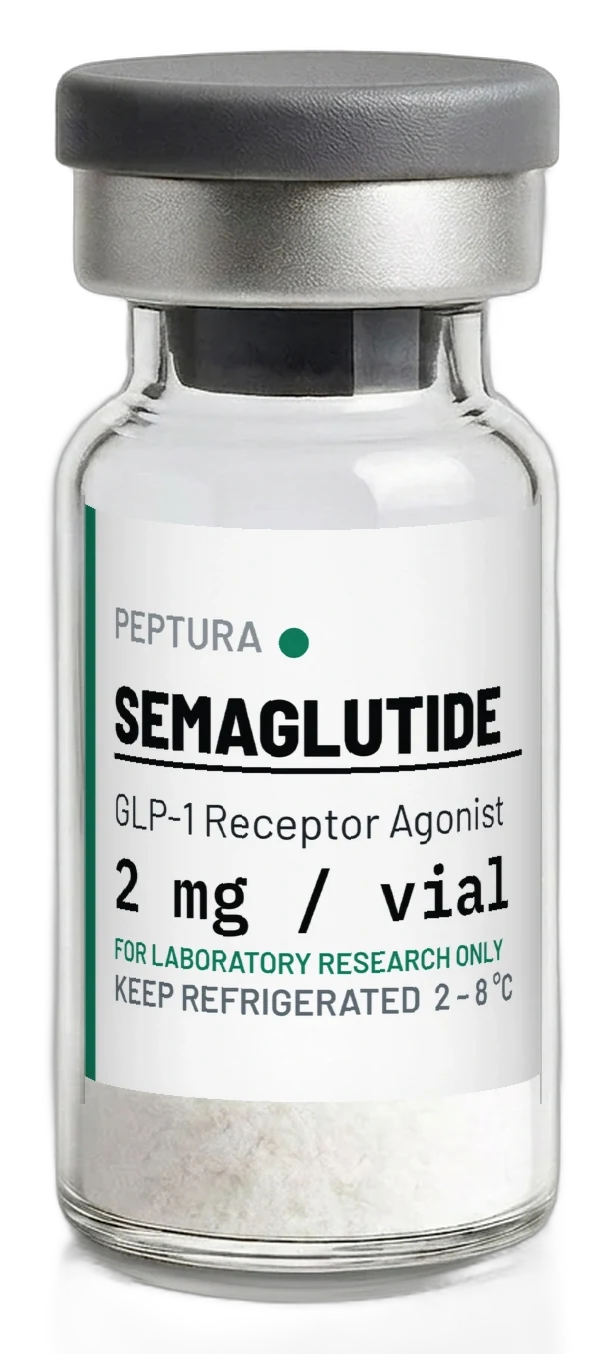
Semaglutide.
About Semaglutide
Semaglutide is among the compounds studied in metabolic and weight-regulation research. An attached fatty acid chain binds to albumin in the blood, protecting over 99% of circulating semaglutide molecules from rapid breakdown — the basis for once-weekly dosing.
Research Application
As the longest clinically established of the three GLP-1-based compounds, semaglutide often serves in research as a reference substance for metabolic and weight-regulation studies, including the group's most extensive cardiovascular outcomes data.
Important to know
Claims circulating online are often not backed by valid clinical data. Treat all information as a starting point for your own scientific research, not as usage guidance.
Sequence and regulatory status data are based on publicly available sources and refer to the compound in general, not to a specific product.
Research Overview
A growing number of preclinical and clinical studies exist for metabolic peptides, though the volume varies significantly by substance.
- Wilding JPH, et al. NEJM. 2021;384(11):989–1002. PMID 33567185
- Lincoff AM, et al. NEJM. 2023;389(24):2221–2232. PMID 37952131
- Aronne LJ, et al. NEJM. 2025;393(1):26–36. PMID 40353578
References without a PMID can be located via the respective publisher. This overview does not claim to be exhaustive.
Question about Semaglutide?
We reply personally – via email or Telegram.