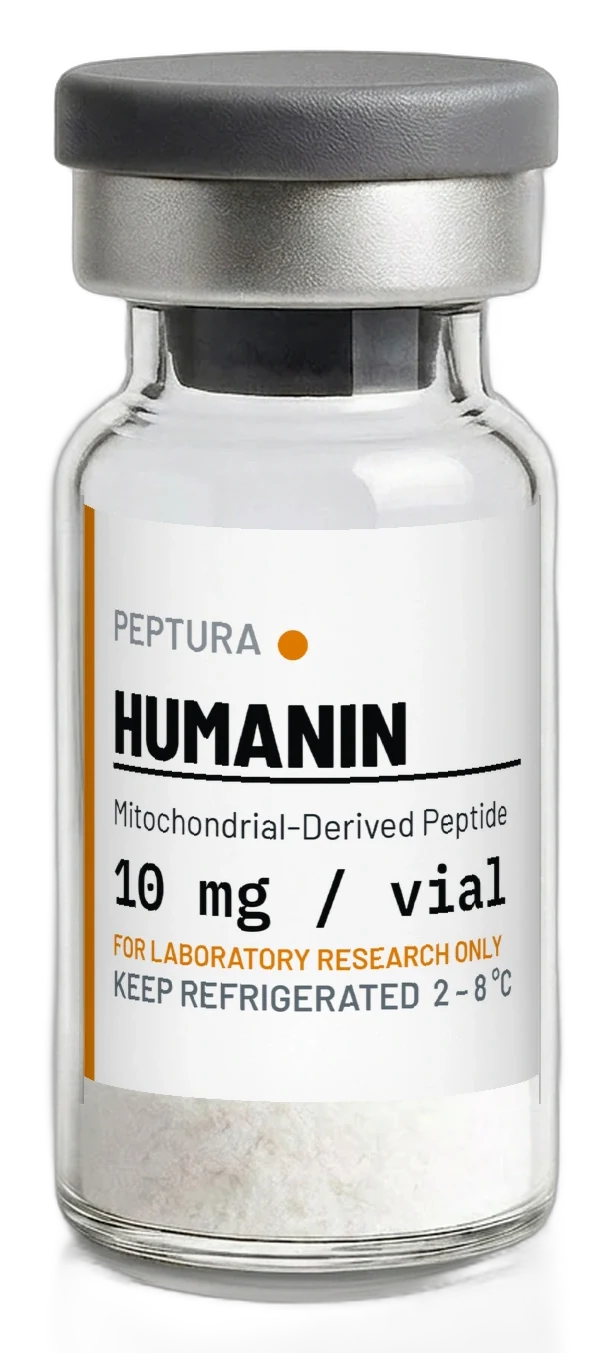
Humanin.
About Humanin
Humanin is studied in research on cellular energy metabolism and longevity. Humanin binds a trimeric receptor complex (CNTFR/WSX-1/gp130) and IGFBP-3, modulating intracellular apoptosis pathways to protect cells from oxidative and metabolic stress. Like MOTS-c, humanin belongs to the class of mitochondrially encoded peptides.
Research Application
Investigated preclinically as a model for mitochondrial cytoprotective mechanisms in ischemia-reperfusion injury, oxidative stress, and neurodegenerative disease research (e.g., Alzheimer's).
Important to know
Claims circulating online are often not backed by valid clinical data. Treat all information as a starting point for your own scientific research, not as usage guidance.
Sequence and regulatory status data are based on publicly available sources and refer to the compound in general, not to a specific product.
Research Overview
Research on longevity and energy metabolism is primarily supported by preclinical data.
- Hashimoto Y, et al. Proc Natl Acad Sci U S A. 2001;98(11):6336–6341. PMID 11371646
- Muzumdar RH, et al. Arterioscler Thromb Vasc Biol. 2010;30(10):1940–1948. PMID 20829503
References without a PMID can be located via the respective publisher. This overview does not claim to be exhaustive.
Similar Peptides
Question about Humanin?
We reply personally – via email or Telegram.